


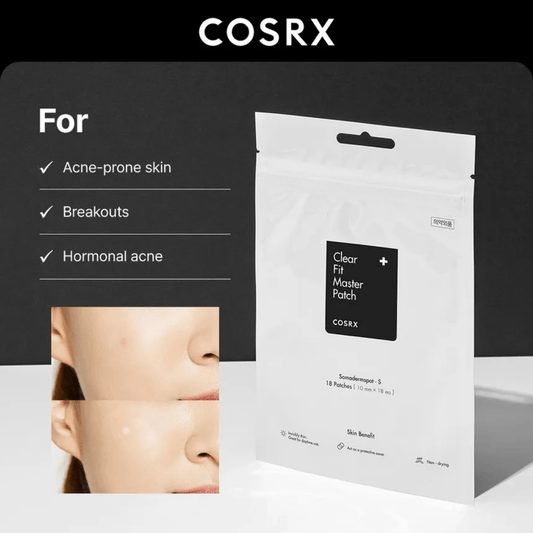

K-Beauty for Sensitive Skin with Hydrocolloid applies one of K-beauty's most successful exports, the pimple patch, to the specific needs of reactive skin. Hydrocolloid patches create a sealed, moist environment over active spots that absorbs fluid, protects from external bacteria, and prevents picking, all without applying active ingredients to the surrounding sensitive skin. For reactive skin that deals with both inflammation and occasional breakouts, this is a targeted approach that works with the skin rather than against it.
Are Hydrocolloid Patches Safe for Sensitive Skin
Hydrocolloid patches are among the safest spot treatments available for sensitive skin. The material, carboxymethylcellulose gel, is biocompatible and hypoallergenic, developed originally for wound dressings in medical settings. It does not introduce actives to the surrounding skin and covers only the spot itself. The patch creates a physical barrier that is the extent of its mechanism, there is no chemical action, no acid, no fragrance. For very sensitive or reactive skin, removing the patch should be done gently to avoid adhesive pull on fragile skin. Ultra-thin versions designed for daytime use have lower adhesive levels and are more appropriate for reactive skin with a fragile barrier.
- Biocompatible carboxymethylcellulose, no chemical or acid action
- Covers the spot only, surrounding sensitive skin is undisturbed
- No fragrance, no active ingredients in basic hydrocolloid patches
- Ultra-thin versions with lower adhesive are gentler for reactive skin
How Hydrocolloid Patches Help Blemishes on Sensitive Skin
Hydrocolloid works by absorbing the pus, oil, and fluid from a blemish as it draws fluid out into the patch material. This absorption removes the contents of the spot gradually and naturally, creating a moist recovery environment that the skin's own repair processes prefer. The sealed environment also prevents external bacteria from reaching the open spot and stops involuntary picking or touching that prolongs recovery. For sensitive skin, this is significant, picking a spot on reactive skin often leaves a post-inflammatory mark that takes weeks to fade. The patch protects against this consequence as much as it treats the spot itself. The visible swelling and whitening of the patch signals that it is working and needs replacing.
- Absorbs spot fluid gradually into the patch material
- Moist recovery environment supports the skin's natural repair
- Sealed environment prevents bacterial contamination and picking
- Visible swelling confirms the patch is working and needs replacing
When to Use Hydrocolloid Patches on Sensitive Skin
Hydrocolloid patches work best on surface-level blemishes that have come to a head, spots where fluid is visible close to the surface. Deep cystic blemishes, which have no visible head, do not respond well to standard patches because there is no surface fluid to absorb. For sensitive skin, the patch is applied as the final step in the evening skincare routine on clean, completely dry skin, any product residue underneath prevents adhesion. Thin daytime patches allow use under makeup. Standard overnight patches should be applied after all other products have fully absorbed. Microneedle versions with added actives like centella or salicylic acid provide an extra layer of care, though actives should be checked for sensitive skin tolerance.
- Best on surface-level spots with visible fluid, not cystic blemishes
- Apply as the final step on clean, completely dry skin
- Thin daytime patches can be used under makeup
- Check actives in microneedle versions for sensitive skin compatibility
Browse the hydrocolloid patch collection above and find the Korean spot treatment that protects and supports blemishes on sensitive skin. Scroll up to explore your options.