





Facial Oils have earned a permanent place in balanced skincare routines. Rich in essential fatty acids, antioxidants, and plant-based actives, they work in harmony with the skin's own lipid structure - nourishing deeply without disrupting. They are far more versatile than their reputation sometimes suggests.
How Facial Oils Fit Into a Routine
Facial oils are typically applied as the last skincare step in an evening routine, after serums and before the skin goes to sleep. In a morning routine, they can be used under SPF - though a very small amount is key, as too much can prevent sunscreen from sitting evenly. Some people use a facial oil instead of a night cream; others layer it over their moisturiser to seal everything in. The rule of thumb is thinnest to thickest - oil goes after water-based serums and before or after moisturiser depending on the formula's weight. Most importantly, a few drops is all the skin needs.
Where oils fit in the routine order
- After serums, before or over moisturiser
- Evening use is most common and effective
- Use sparingly in the morning if layering with SPF
- A few drops is all the skin needs
Facial Oils and Oily or Blemish-Prone Skin
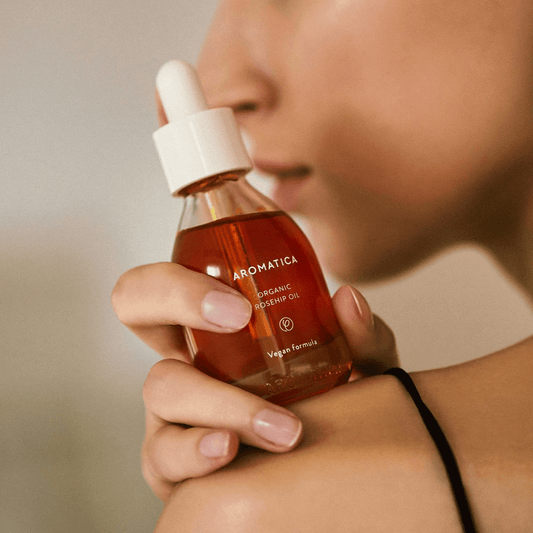
Oily skin can absolutely use facial oils - it is a question of choosing the right one. Some oils are non-comedogenic and are absorbed by the skin without clogging pores. Squalane, which is derived from olives or sugarcane, is one of the lightest and most compatible oils for oily skin - it mimics the skin's own natural lipids and absorbs without a greasy residue. Rosehip oil is another well-tolerated option for blemish-prone skin, as it is lightweight and rich in essential fatty acids that support an even, clear complexion. Avoid heavy, occlusive oils like coconut or mineral oil on blemish-prone skin.
- Squalane - lightest and best for oily skin
- Rosehip - lightweight, suits blemish-prone skin
- Non-comedogenic oils absorb without clogging
- Avoid coconut and mineral oil on blemish-prone skin
Best Time to Apply a Facial Oil
Evenings are the most effective time to use a facial oil. The skin is in repair and renewal mode overnight, and a nourishing oil applied before sleep works in harmony with this natural cycle. For dry or mature skin, a richer oil like marula or argan delivers deep nourishment through the night. For oily or combination skin, a dry-finish oil like squalane works better in the evening without leaving a residue. In the morning, a very small amount of a dry-finish oil can be pressed into the skin before SPF - but keep it minimal to avoid pilling beneath sunscreen or makeup.
- Evening is the most effective time for facial oil
- Richer oils suit dry and mature skin at night
- Dry-finish oils work for oily skin in the morning
- Keep morning amounts minimal under SPF
Dry vs Non-Dry Facial Oils
The distinction between dry and non-dry facial oils is worth understanding when choosing the right formula. Dry oils absorb quickly into the skin without leaving a shiny or greasy residue - they feel almost weightless after application. Squalane and rosehip are examples of dry oils. Non-dry oils are richer and more occlusive - they sit on the skin's surface for longer, creating a protective seal that is excellent for very dry, dehydrated, or mature skin but can feel heavy or shiny on oilier types. Knowing where your skin sits on the dry-to-oily spectrum helps you choose a formula that feels comfortable from morning through to evening.
- Dry oils - absorb quickly, no residue
- Non-dry oils - richer, more occlusive, suit dry skin
- Match the oil weight to your skin type
- Sensitive skin benefits from light, pure single-ingredient oils
Explore the full range of facial oils below. Whether your skin needs a lightweight squalane oil for daily balance or a deeply nourishing formula for nighttime restoration, there is an option here to help your skin look and feel its most healthy.