


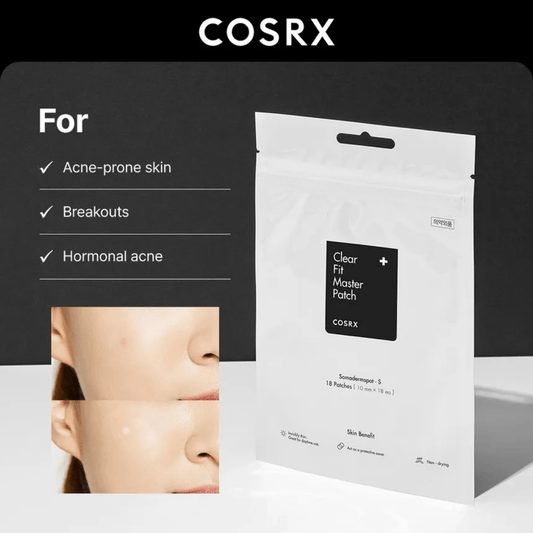


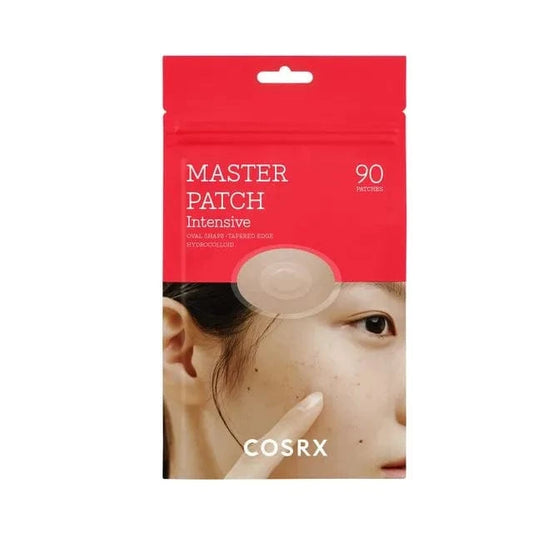
Korean Hydrocolloid Spot Treatments draw fluid from a blemish while creating a physical barrier that protects the area and speeds healing. These patches work overnight to flatten spots, reduce inflammation, and significantly lower the risk of post-blemish scarring.
How Hydrocolloid Technology Works
Hydrocolloid is a material originally developed for wound care that has been adapted for consumer skincare in patch format. The material contains gel-forming agents (carboxymethylcellulose or gelatin) embedded in an adhesive base. When applied to a blemish, the hydrocolloid draws fluid, including sebum, pus, and inflammatory exudate, from the blemish by osmotic pressure. This fluid is absorbed into the hydrocolloid matrix, which turns white as it fills. The patch simultaneously creates an occlusive, moist microenvironment at the wound site that is scientifically established to accelerate tissue repair and reduce scarring compared to a dry healing environment.
- Draws fluid from the blemish by osmotic pressure
- Creates a moist occlusive environment that accelerates healing
- Physically prevents touching, which reduces contamination and scarring
Types of Hydrocolloid Spot Treatments
Basic hydrocolloid patches provide the core drawing and protective mechanism. More advanced Korean hydrocolloid patches incorporate active ingredients, salicylic acid, niacinamide, centella, or tea tree, within the patch matrix so that the treatment is delivered directly to the blemish through sustained contact rather than applied as a cream. Some patches include microneedle arrays that create microscopic channels for better active delivery. Patches with dimethyl sulfoxide (DMSO) or other penetration enhancers are less common but exist at the premium end of the market. Most users find standard or centella-enhanced patches highly effective for typical surface blemishes.
- Basic patches provide drawing and protection without actives
- Active-enhanced patches deliver ingredients directly through the patch
- Microneedle variants for deeper active penetration
When and How to Use Hydrocolloid Patches
Hydrocolloid patches are most effective on surface whiteheads, blemishes that have come to a head and are close to the skin surface. They are less effective on deep cystic blemishes that have not formed a visible head, as the drawing mechanism cannot reach deep enough into the tissue. Apply to clean, dry skin, any skincare residue on the surface reduces adhesion significantly. Apply at night for best results, as the patch can work undisturbed for six to eight hours. Remove by peeling gently from the edge. The white filling visible in the patch is the absorbed fluid, a sign the treatment has worked.
- Most effective on surface whiteheads, not deep cystic blemishes
- Apply to clean, dry skin for maximum adhesion
- Remove gently from the edge after 6-8 hours overnight
Hydrocolloid Patches Versus Traditional Spot Treatments
Hydrocolloid patches and cream or gel spot treatments serve different purposes. Patches are most effective at the end of a blemish's lifecycle, when a whitehead has formed and fluid extraction is possible. Gel or cream spot treatments are more effective earlier, when the blemish is still forming under the skin and actives can interfere with the bacterial and inflammatory process before it reaches the surface. Using both in sequence, a calming gel treatment during the early inflammatory phase, followed by a hydrocolloid patch when the blemish comes to a head, represents the most comprehensive approach across the full blemish lifecycle.
- Patches most effective on formed surface whiteheads
- Gel treatments better for early-stage, sub-surface blemishes
- Sequential use covers the full blemish lifecycle most effectively
Find your ideal hydrocolloid treatment in our Korean Hydrocolloid Spot Treatments range, targeted, protective blemish care that works while you sleep.