








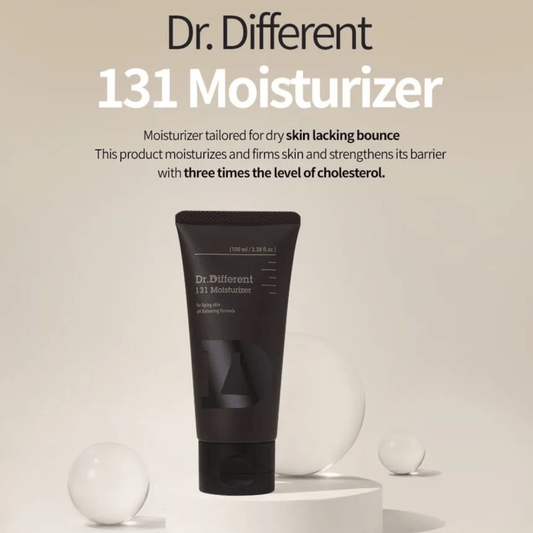




K-Beauty for Sensitive Skin with Cholesterol addresses barrier repair at its most precise level. Cholesterol makes up roughly 25% of the skin's natural lipid matrix, a proportion that is just as important as ceramide content for a fully functioning barrier. Korean barrier-repair formulations that include cholesterol alongside ceramides and fatty acids provide the most complete, physiologically accurate lipid replacement available for sensitive skin.
How Cholesterol Helps Repair the Sensitive Skin Barrier
The skin barrier lipids, ceramides, cholesterol, and fatty acids, maintain a specific ratio (roughly 3:1:1) that determines how effectively the barrier holds moisture and excludes irritants. When only ceramides are replenished without cholesterol and fatty acids, the barrier matrix is incomplete and repair is partial. Cholesterol integrates directly into the lipid bilayer between skin cells, restoring the correct ratio and filling the structural gaps that cause permeability. For sensitive skin, this complete lipid replacement means the barrier can return to a state where fewer irritants penetrate and the inflammatory response fires less frequently.
- Cholesterol maintains the critical 3:1:1 ceramide:cholesterol:fatty acid ratio
- Without cholesterol, ceramide-only repair is incomplete
- Integrates directly into the lipid bilayer between cells
- Complete ratio repair reduces irritant penetration for sensitive skin
Is Cholesterol Safe for All Sensitive Skin Types
Topical cholesterol is among the safest barrier repair ingredients available. It is already a component of the skin, the skin naturally manufactures its own cholesterol for barrier use, so it is readily accepted without rejection or reaction. It has no scent, colour, or sensory signature. Allergic reactions are virtually unheard of. For very sensitive skin recovering from barrier damage, cholesterol-containing products provide barrier repair without adding any ingredient that could trigger further reaction. Note that vegan and strict vegetarian users should check the source, topical cholesterol is typically derived from lanolin (sheep's wool), though synthetic options are available.
- Already a skin-manufactured lipid, readily accepted without reaction
- No scent, colour, or sensory signature
- Allergic reactions essentially unheard of
- Check sourcing if vegan: typically lanolin-derived
Why Cholesterol Is Combined with Ceramides in Korean Skincare
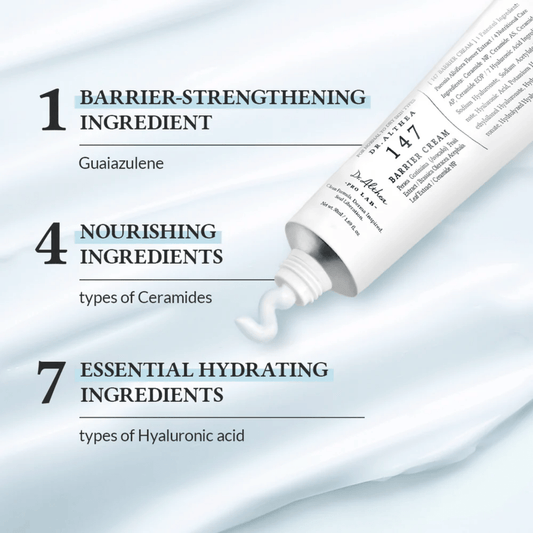
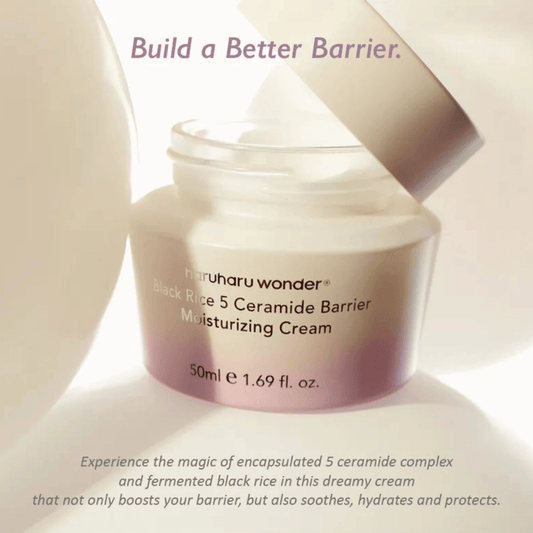
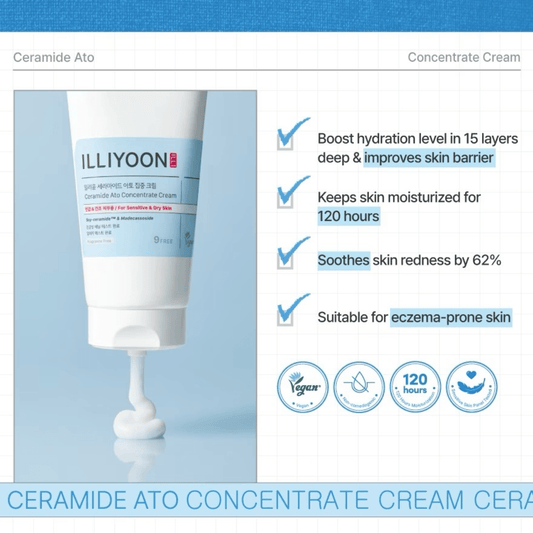
Korean brands that focus on barrier repair, Dr. Jart+ Ceramidin, Illiyoon, Aestura AtoBarrier 365, include cholesterol alongside ceramides specifically because the correct lipid ratio matters more than any single lipid alone. A product with ten types of ceramide but no cholesterol will repair the barrier less effectively than a product with multiple ceramide types and cholesterol together in proportion. For sensitive skin, this means choosing barrier repair products that list both ceramides and cholesterol in the ingredient list, ideally in the upper third of the list where concentrations are meaningful. Phytosphingosine is often included in the same products as a ceramide precursor with additional calming properties.
- Correct lipid ratio matters more than single lipid abundance
- Ceramide plus cholesterol outperforms ceramide-only repair
- Look for both in the upper third of the ingredient list
- Phytosphingosine often accompanies them for added calming
Find the Korean cholesterol barrier repair products for your sensitive skin in the collection above.