

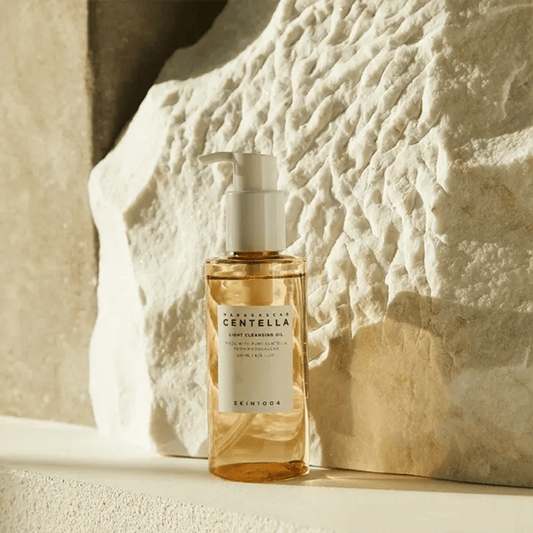
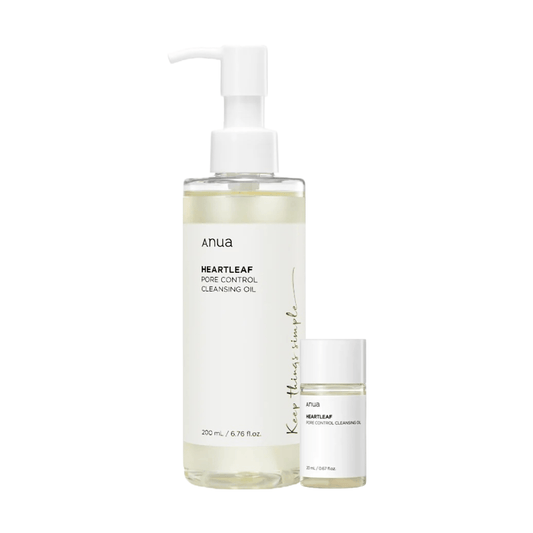
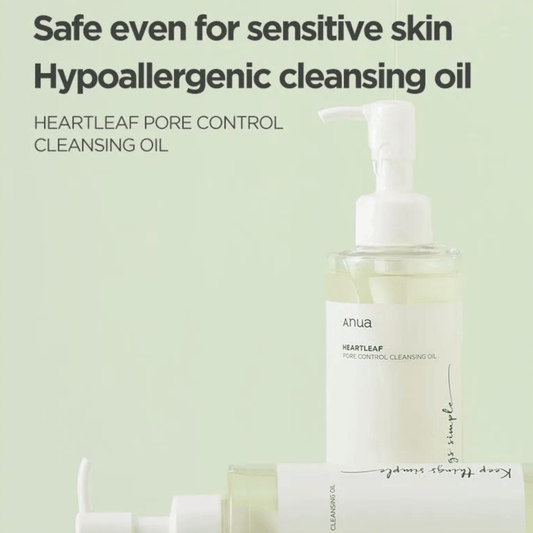

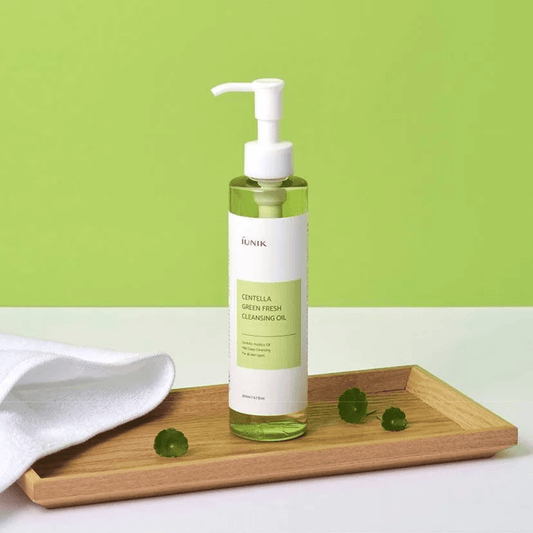

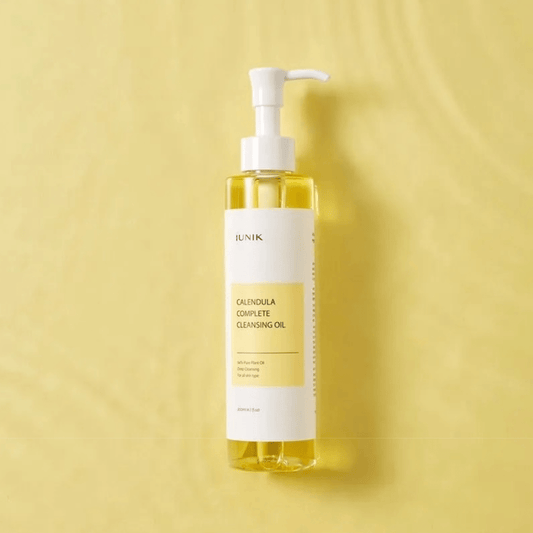

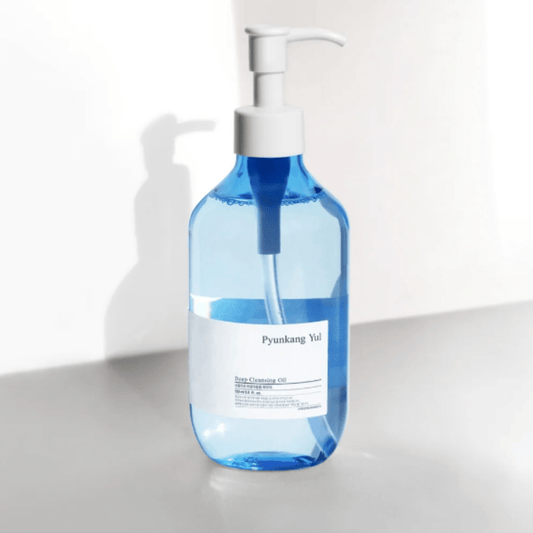

Soothing Korean Cleansing Oils are the foundation of an evening routine for sensitive and reactive skin. The K-beauty double cleanse places oil first, on dry skin, massaged to dissolve makeup, SPF, and the day's surface accumulation, followed by a water-based cleanser. When that first step includes calming botanicals alongside the cleansing oils, the skin arrives at the second cleanse already beginning to settle.
What to Look for in a Soothing Cleansing Oil
A soothing cleansing oil should emulsify fully with water, turning milky and rinsing away completely without leaving any oily residue. The calming component typically comes from centella asiatica, bisabolol, or allantoin added to the formula. The base oils matter too: lightweight, linoleic-forward oils like sunflower or safflower are less likely to congest the skin than heavier saturated oils. For reactive skin, fragrance-free or lightly scented formulas are the safer choice, as fragrance in cleansers concentrates briefly on the skin during massage before rinsing. Squalane-based cleansing oils are another gentle option that dissolves product effectively while being very well tolerated.
- Full emulsification for a clean, residue-free rinse
- Calming botanicals like centella or bisabolol
- Lightweight linoleic base oils for less congestion
- Fragrance-free or lightly scented for reactive skin
- Squalane-based options for the most sensitive skin
How to Use a Cleansing Oil Correctly
Apply a generous amount to dry skin: never wet, as water activates the emulsifiers and reduces cleansing effectiveness. Massage for thirty to sixty seconds, paying attention to areas where makeup or SPF tends to sit: around the nose, along the hairline, and on the eyelids. Add a small amount of water to emulsify, massage briefly, then rinse thoroughly. Skin should feel soft and clean, not tight or dry. Follow immediately with a gentle water-based second cleanser to remove any remaining residue and cleanse the skin itself.
- Apply to dry skin before any water contact
- Massage for thirty to sixty seconds
- Emulsify with water before rinsing thoroughly
- Follow with a water-based second cleanser
Cleansing Oil vs Cleansing Balm
Both formats serve the same purpose, but the experience differs. Cleansing oils are liquid at room temperature and spread easily with minimal effort. Cleansing balms are solid and melt on contact with skin, offering a thicker, more cushioned massage. Both emulsify and rinse cleanly when well-formulated. For reactive skin, the choice comes down to preference. Balms may feel more luxurious and provide more cushion for skin that is tender. Oils are quicker to apply and rinse. Neither is inherently better for soothing; the ingredient list matters more than the format.
- Oils spread easily and rinse quickly
- Balms melt on contact for a cushioned massage
- Both emulsify and rinse cleanly
- Choose based on texture preference, not format
Why the First Cleanse Matters for Reactive Skin
Reactive skin is particularly vulnerable to barrier disruption during cleansing. Rubbing, over-washing, or using harsh surfactants removes natural oils alongside the product, weakening the barrier before it has a chance to recover overnight. A gentle soothing Korean cleansing oil that emulsifies fully and rinses clean removes surface product without disturbing the skin's own oil layer. This preserves the barrier integrity that reactive skin relies on, meaning the skin is calmer and more receptive to the soothing steps that follow.
- Gentle oils preserve the skin's natural lipid layer
- No rubbing needed: massage is enough
- Reduces barrier disruption during evening cleansing
- Skin is more receptive to soothing steps after
Browse the collection above. An evening routine that starts calmly sets the tone for everything that follows.