



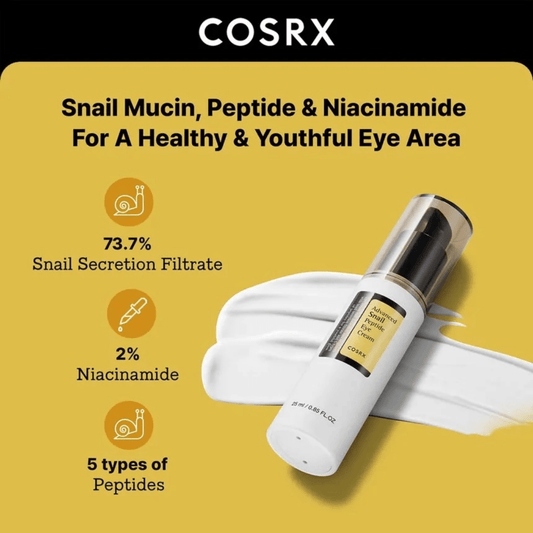

Korean skincare with snail mucin for firmness loss rebuilds the structural foundation that keeps skin taut, defined, and resilient against gravity. Firmness loss becomes visible when collagen and elastin production drops below the rate at which existing fibres degrade. The jawline softens, cheeks flatten, and the skin around the eyes and mouth develops a looser drape. Snail mucin contains the specific compounds that signal the skin to increase production of both structural proteins.
The Structural Proteins Behind Firmness
Skin firmness depends on two protein networks. Collagen provides tensile strength, the resistance to being stretched. Elastin provides snap-back, the ability to return to shape after being pulled. Both decline with age, UV exposure, and environmental stress. Effective firming requires supporting production of both, not just one.
- Copper peptides directly signal fibroblasts to produce new collagen fibres
- Growth factors in the filtrate stimulate elastin synthesis alongside collagen
- Glycoproteins provide immediate matrix support while protein rebuilding occurs
- Hyaluronic acid plumps the skin for visible lift even before collagen rebuilds
Why Topical Treatment Matters
Fibroblasts in the dermis respond to local chemical signals. The copper peptides and growth factors in snail mucin provide those signals directly to the cells that produce collagen and elastin. This localised stimulation is different from and complementary to systemic approaches like diet and supplements. Applying these compounds directly to areas showing firmness loss ensures the right cells receive the production signals.
Realistic Expectations
Firmness improvement is one of the slower visible changes from snail mucin because collagen remodelling takes time. Initial plumping from improved hydration is noticeable within two to three weeks. Structural firmness improvements from increased collagen and elastin density become apparent after eight to twelve weeks of consistent twice-daily application, building progressively with continued use.