





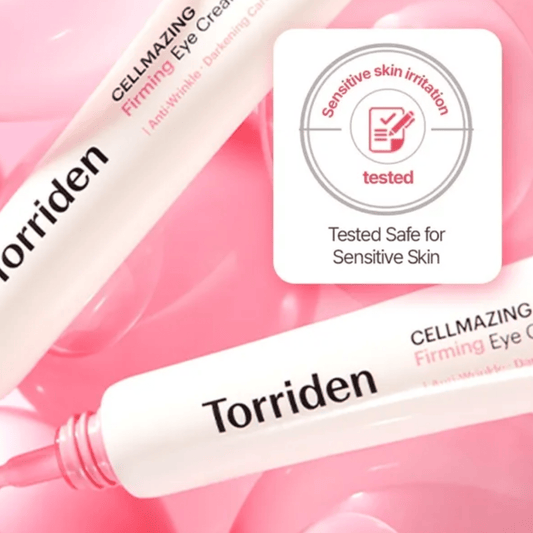

Korean Eye Creams for Barrier Repair address the specific challenge of orbital skin that has become reactive, stingy, or fragile, often after overuse of actives, harsh cleansers, or environmental stress. The barrier around the eyes is naturally thinner than elsewhere on the face, which means it disrupts more easily and needs a careful, ingredient-specific approach to restore comfort and resilience rather than continuing to add active steps.
Signs Your Eye Area Barrier Needs Repair
A disrupted eye area barrier reveals itself through several clues: products that never stung before now cause a burning sensation, redness appears around the orbital bone after cleansing, the skin looks flaky or feels tight even after applying eye cream, and the under-eye feels sensitive to temperature changes. These are signs that the lipid layer has been compromised and needs replenishing rather than treating with more actives. Pushing through with the same active-laden routine after these signs appear typically prolongs the disruption and worsens the sensitivity over time.
- Stinging from products that were previously fine
- Persistent redness around the orbital bone
- Tightness that does not resolve with eye cream
- Increased sensitivity to temperature or touch
Ingredients That Repair the Eye Barrier
Barrier repair eye creams for the orbital area rely on lipid-replenishing ingredients: ceramides, cholesterol, and fatty acids in ratios that mimic the skin's own natural barrier composition. Centella asiatica and madecassoside calm the inflammatory response that barrier disruption triggers. Panthenol and allantoin support surface healing and reduce the tightness that comes from compromised barrier function. These formulas are fragrance-free and contain no actives that could further stress the skin during the recovery period. The ingredient list should be short, focused, and free from the common irritants that make recovery take longer than it should.
- Ceramides, cholesterol, and fatty acids replenish lipids
- Centella and madecassoside calm inflammation
- Panthenol and allantoin support surface recovery
- Fragrance-free formulas reduce further irritation risk
How to Use During Recovery
When repairing the eye area barrier, simplify the entire routine. Drop all active ingredients including retinol, vitamin C, and exfoliants. Apply the barrier repair eye cream morning and evening after gently cleansing with a non-stripping formula. Give the skin two to four weeks of this simplified care before reintroducing anything more active. Once the barrier feels intact, with no stinging, no unusual dryness, and products absorbing comfortably again, gradually layer one product at a time back in, leaving at least a week between each addition to isolate any new reactions accurately.
- Simplify the routine while repairing
- Drop all actives during the recovery period
- Apply morning and evening consistently
- Allow two to four weeks before reintroducing actives
Preventing Future Barrier Disruption
Once the orbital barrier has recovered, building habits that prevent disruption is as important as the repair itself. Avoid using exfoliating actives directly in the eye area. Be conservative with retinol concentration around the orbital bone, starting low and building slowly. Choose cleansers that leave the skin feeling comfortable rather than tight after rinsing. Sun protection every morning reduces UV-driven barrier degradation that accumulates silently even on overcast days. These small consistent choices keep the orbital barrier stable over months and years without requiring repeated recovery periods or extended breaks from an active routine.
- Keep exfoliating actives away from the orbital area
- Use conservative retinol concentrations near the eye
- Gentle cleansers prevent daily barrier stripping
- Morning SPF reduces UV-driven barrier degradation
Explore the collection above to find the Korean barrier repair eye cream that supports your orbital skin back to comfort.