

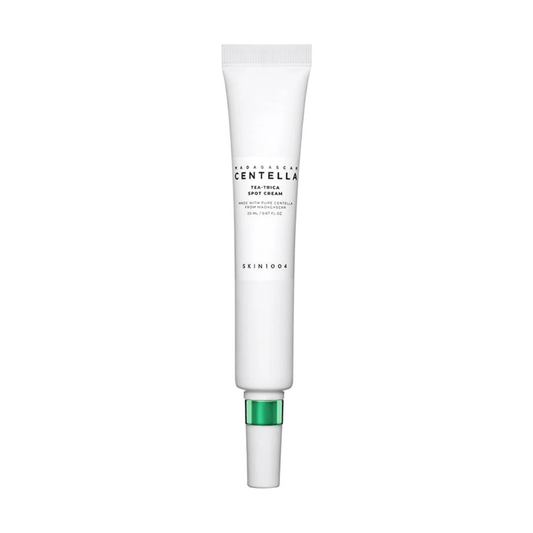

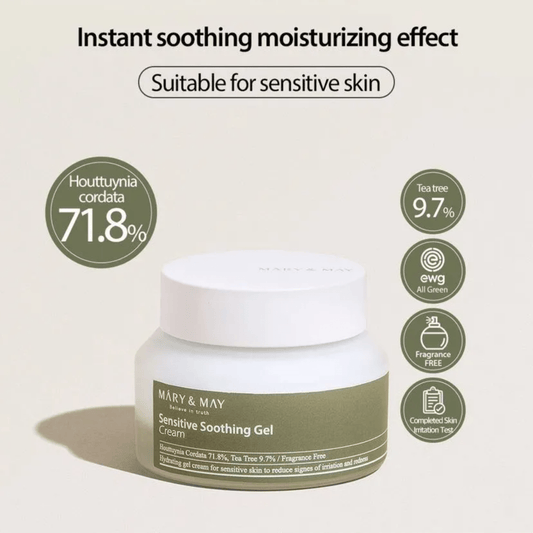

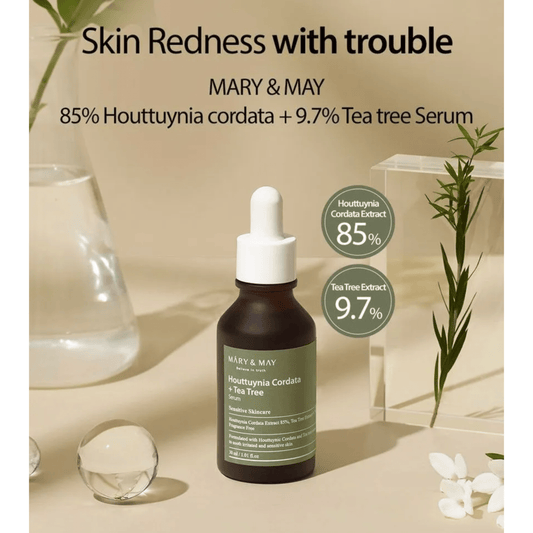


Tea tree (Melaleuca alternifolia) is one of the most researched natural antimicrobial ingredients in skincare, with the active compound terpinen-4-ol showing comparable results to benzoyl peroxide for mild to moderate acne in clinical studies. For dry skin, the challenge is that many tea tree products are formulated for oil control, using drying alcohols and strong surfactants that a dry barrier cannot tolerate. Korean tea tree products take a different approach: lower concentrations, gentler bases, and pairing with calming ingredients.
How Tea Tree Helps Dry Skin
Tea tree's antimicrobial action is relevant to dry skin primarily when dryness is accompanied by blemishes -- a combination that occurs when the compromised barrier becomes more permeable to bacteria. At lower concentrations, tea tree helps control acne-causing bacteria without the aggressive drying effect of concentrated formulas. The anti-inflammatory properties of terpinen-4-ol also help reduce redness around existing blemishes, which dry skin can be slower to resolve.
- Antimicrobial action at lower concentrations safe for dry skin
- Reduces inflammation around blemishes on reactive skin
- Helps clear pores without stripping the barrier further
- K-beauty formulas pair it with centella or green tea for balance
What to Look For in Korean Tea Tree Products
Korean tea tree products that suit dry skin share several characteristics: no high-strength alcohol in the first five ingredients, additional soothing actives like centella asiatica or aloe vera, hydrating elements like hyaluronic acid or glycerin to counterbalance any drying tendency, and lower overall tea tree concentrations designed for sensitive or combination-dry skin. Some By Mi's tea tree range pairs it with AHA, BHA, and PHA but at gentle concentrations that suit most skin types.
- Low-alcohol or alcohol-free base for dry skin safety
- Centella or aloe vera to balance tea tree's drying potential
- Hydrating ingredients like glycerin in the same formula
- Lower concentration for everyday use on dry or sensitive skin
Routine Placement
Tea tree products fit at different points in a dry skin routine depending on their format. Cleansers go first. Toners and treatment essences go after cleansing. Serums and spot treatments go after toner. For dry skin, the most practical approach is a mild tea tree toner in the evening, followed immediately by hydrating layers to counterbalance any temporary drying. Spot treatments can be used targeted and sparingly on blemishes after the full routine.
- Cleanser: first step in the evening routine
- Toner: after cleansing, before hydrating layers
- Serum: after toner in the treatment step
- Spot treatment: last step, applied directly to blemishes only
Cautions for Dry Skin
Tea tree is not suitable for eczema-prone or very compromised dry skin, where any antimicrobial ingredient can cause irritation. Dry skin types should always patch test tea tree products before full use. If tingling persists for more than a few minutes or redness appears, the concentration is likely too high for the current barrier state. Introduce tea tree slowly -- once or twice weekly -- before moving to daily use.
- Patch test before full facial application
- Not suitable for eczema-prone or severely dry skin
- Start once to twice weekly, increase only if well tolerated
- Follow with generous hydrating layers to support the barrier
Find Korean tea tree products suited to dry skin below -- gentle concentrations, barrier-supportive bases, and soothing combinations that address blemishes without compromising moisture.